
Free face shape detector
What is my face shape?
Add a selfie or use your camera. We measure your face length, forehead, cheekbones and jaw, match you to one of 7 face shapes and let you try on glasses that suit you. Your photo is never uploaded — it’s analyzed right in your browser.
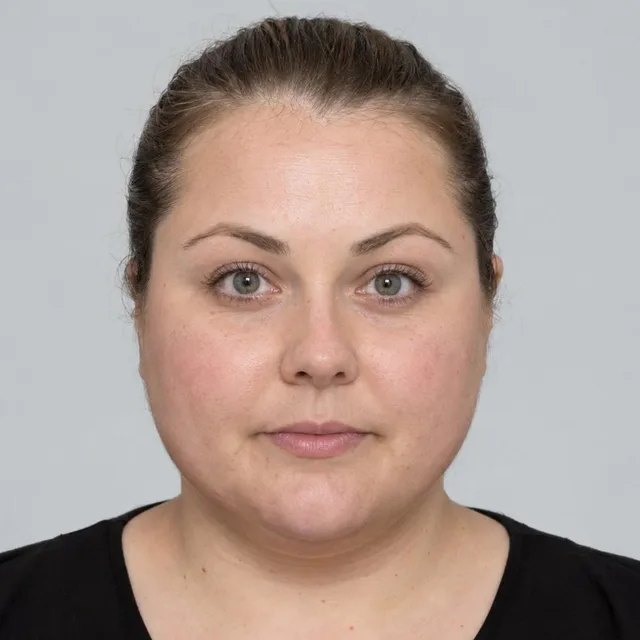
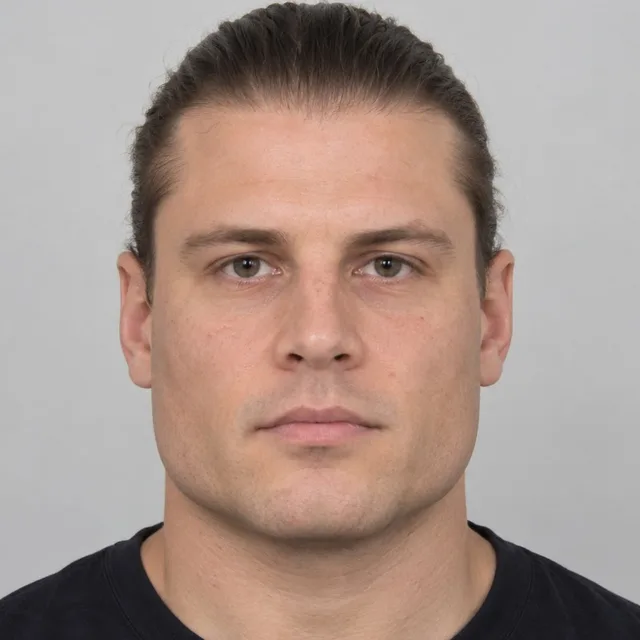
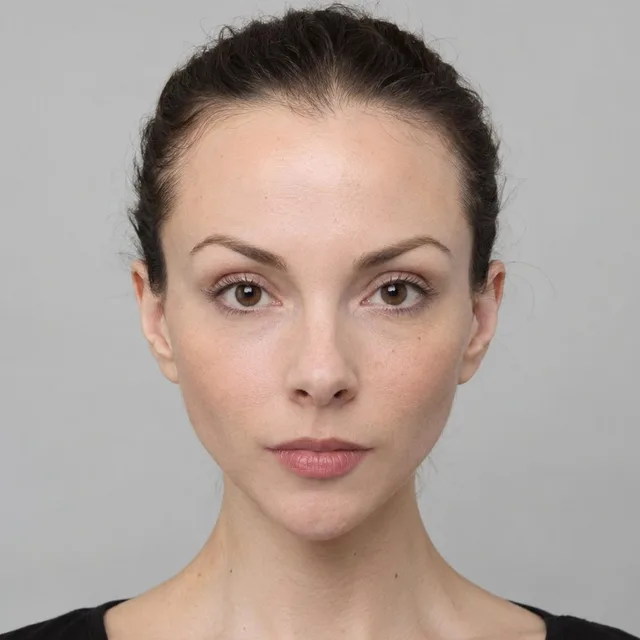
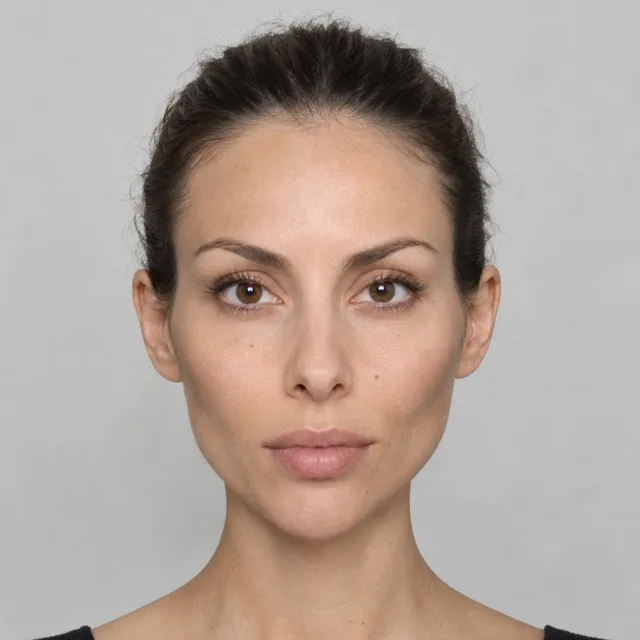

- 478 facial landmarks
- 0 photos uploaded
- 7 face shapes
Check your face shape
Face the camera, pull your hair back, use even light and take off your glasses for the most accurate result.
Never uploaded, never stored — it runs in your browser.
The 7 face shapes
What each face shape looks like
Every face is a mix, but most lean toward one of seven shapes. Tap a shape for its best glasses, haircuts and brows.
How it works
How the face shape detector works
Three steps, about five seconds, and nothing leaves your device.
 Step 1
Add a photo
Choose a front-facing photo from your device or take one with your camera. JPG, PNG and WebP all work, on phone or desktop.
- Step 2
We measure your face
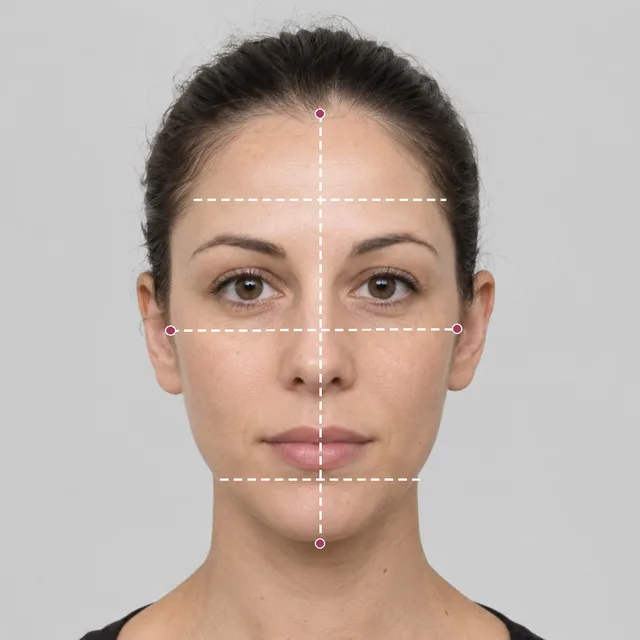
On-device AI maps 478 facial landmarks and traces your real face outline from hairline to chin.
 Step 3
Get your shape — and try on frames
Your proportions are matched to one of 7 face shapes, with glasses you can try on instantly.
Do it by hand
How to find your face shape with a tape measure
No photo? Grab a soft tape measure and a mirror, take these four measurements, then compare them.
- 1
Forehead width
Measure across your forehead at its widest point, roughly halfway between your hairline and eyebrows.
- 2
Cheekbone width
Find the highest point of each cheekbone, just below the outer corner of each eye, and measure straight across.
- 3
Jaw width
Measure from the corner of your jaw below one ear to the same point on the other side.
- 4
Face length
Measure from the centre of your hairline straight down to the tip of your chin.
Reading your numbers
- Length about 1.5× the width, forehead a little wider than the jaw → oval.
- Length about equal to width with a soft jaw → round; with a square, angular jaw → square.
- Forehead widest, jaw narrow and chin pointed → heart.
- Cheekbones clearly widest, forehead and jaw narrow → diamond.
- Length 1.6× the width or more, even widths → oblong.
- Jaw widest, forehead narrow → triangle.
Measuring yourself is fiddly — the face shape detector takes the same measurements from a photo.
Why it matters
What your face shape tells you
Stylists, opticians and barbers all start from the same question: which proportions should we balance?
Glasses
Frames that contrast with your face look most natural: angular frames for soft, round faces; curved frames for strong, square jaws; deeper frames for long faces.
Haircuts
Where you add volume changes how long or wide your face looks. Height on top lengthens a round face; width at the sides shortens an oblong one.
Brows & makeup
Brow shape and contour follow the same logic: a high arch lifts a round face, a flat brow widens a long face, soft curves calm angular features.
Beards
Facial hair can reshape a jawline. A pointed beard lengthens a round face, a rounded one softens a square jaw, and fullness at the chin balances a heart shape.
Face shapes for women
The same seven shapes apply to everyone. Women’s faces are, on average, a little shorter with softer jaw angles, so oval, round and heart results are common. Hair length and parting have the biggest effect on how a face shape reads — pull your hair back before you measure.
Face shapes for men
Men’s faces more often have a wider, more angular jaw, so square, oblong and triangle results come up more. Beards change the outline the detector sees: for your natural face shape, use a clean-shaven photo, or treat the result as the shape your beard creates.
Cheat sheet
Glasses, haircuts and brows for every face shape
The quick version. Each face shape guide goes into more detail.
| Face shape | How to spot it | Best glasses | Best haircuts | Brows |
|---|---|---|---|---|
| Oval | About 1.5× as long as wide, softly tapered jaw | Rectangle, Oversized square, Aviator | Almost anything — long layers, blunt bob, curtain bangs | Soft angled arch |
| Round | As wide as long, full cheeks, soft jaw | Rectangle, Oversized square, Browline | Length past the chin, volume on top, side parts | High, defined arch |
| Square | As wide as long, angular jaw, even widths | Round, Aviator, Cat-eye | Soft waves, layers from the cheekbones, side fringe | Soft rounded arch |
| Heart | Wide forehead, narrow pointed chin | Round, Aviator, Rectangle | Chin-length bobs, side-swept or curtain bangs | Low, rounded arch |
| Diamond | Cheekbones widest, narrow forehead and chin | Cat-eye, Browline, Round | Fringes, chin-length bobs, tucked-back styles | Curved brow with a soft peak |
| Oblong | About 1.6× as long as wide, straight sides | Oversized square, Aviator, Round | Bangs, volume at the sides, shoulder length | Flat, straight brow |
| Triangle | Jaw wider than the forehead | Browline, Cat-eye, Aviator | Volume at the crown and temples, side bangs | Fuller, longer brow |
Shopping for frames? See glasses for my face shape.
Under the hood
How we decide your face shape
What we measure
Many face shape tools only read a fixed mesh of landmarks, which is a smoothed template and can’t see your real hairline or jaw corner. We combine Google MediaPipe’s 478 face landmarks with a segmentation model that outlines your actual face, then measure:
- Face length, hairline to chin, divided by cheekbone width
- Forehead width at 20% of the way down the face
- Jaw width at 80–85% of the way down
- How quickly the jaw narrows toward the chin
How accurate is it?
On our own test set of front-facing portraits, the detector matched the intended face shape more often than the two most popular face shape detectors we compared it with. But face shape is a spectrum, not a category: when your measurements sit near a boundary, a slightly different photo can tip the result. That’s why we show the numbers behind every result, so you can see how close you are to the neighbouring shape.
Results are for general style guidance and entertainment — not a medical, optical or professional assessment.
Photos that work
- Face the camera straight on, at eye level
- Hair pulled back from the forehead and jaw
- Even, front-facing light — daylight from a window is ideal
- Neutral expression, mouth closed
Photos that don’t
- Selfies taken from below or above
- Glasses, hats or a fringe covering the forehead
- Strong side shadows or backlight
- Group photos — use a photo with just one face
Privacy
Private by design
Face analysis shouldn’t mean handing your face to a server.
Never uploaded
Your photo is processed on your own device. No image ever reaches our servers — you can even switch off Wi-Fi after the model loads.
Never stored
Nothing is saved. Close or refresh the page and the photo and its measurements are gone.
Runs in your browser
Detection uses Google’s open-source MediaPipe models, downloaded once from our site and run locally.
FAQ
Face shape detector FAQ
Your face shape comes from four proportions: face length, forehead width, cheekbone width and jaw width. Add a front-facing photo to the face shape detector above and it measures all four and matches them to one of seven shapes: oval, round, square, heart, diamond, oblong or triangle.
No. The detector runs entirely in your browser using Google’s MediaPipe models, which your device downloads once. Your photo is never sent to a server, never stored, and disappears when you close the page.
It measures your real face outline, from hairline to chin, rather than guessing from a generic face template, which makes it more reliable than many face shape finders. Results still depend on the photo: a tilted head, hair over the forehead, glasses or strong shadows can shift the reading. Treat the result as style guidance, not a professional assessment.
Many faces sit between two shapes, for example oval and oblong. The result explains the measurements behind it, so you can see how close you are to the next shape. Try two or three photos in good light and go with the shape that comes up most often — and borrow styling tips from both.
Yes. It is free to use as often as you like, with no sign-up and no app to install. It works on phones, tablets and computers.
Both. A face shape calculator compares measurements you take yourself; this tool takes those measurements for you with on-device AI that maps your facial landmarks and outline. So it works as a face shape analyzer, face shape scanner and face type detector in one — no tape measure needed.
Face the camera straight on with a neutral expression, pull your hair back so your hairline and jaw are visible, take off your glasses, and use even light from the front. Hold the phone at eye level — shooting from below or above changes how long your face looks.
Your bone structure doesn’t change in adulthood, but weight changes, ageing and facial hair change the soft outline of the face, so a detector may read you differently over time. A beard, for example, can make a round or oval face read as square.
Oval and round are usually described as the most common face shapes, and diamond and triangle as the least common. In practice many people are a blend of two shapes.
Yes. After your result, tap any frame style to see it on your photo. Styles that suit your face shape are listed first. See our guide to glasses for your face shape for more detail.
Find your face shape in seconds
Free, no sign-up, and your photo never leaves your device.
Try the face shape detectorProcessed in your browser